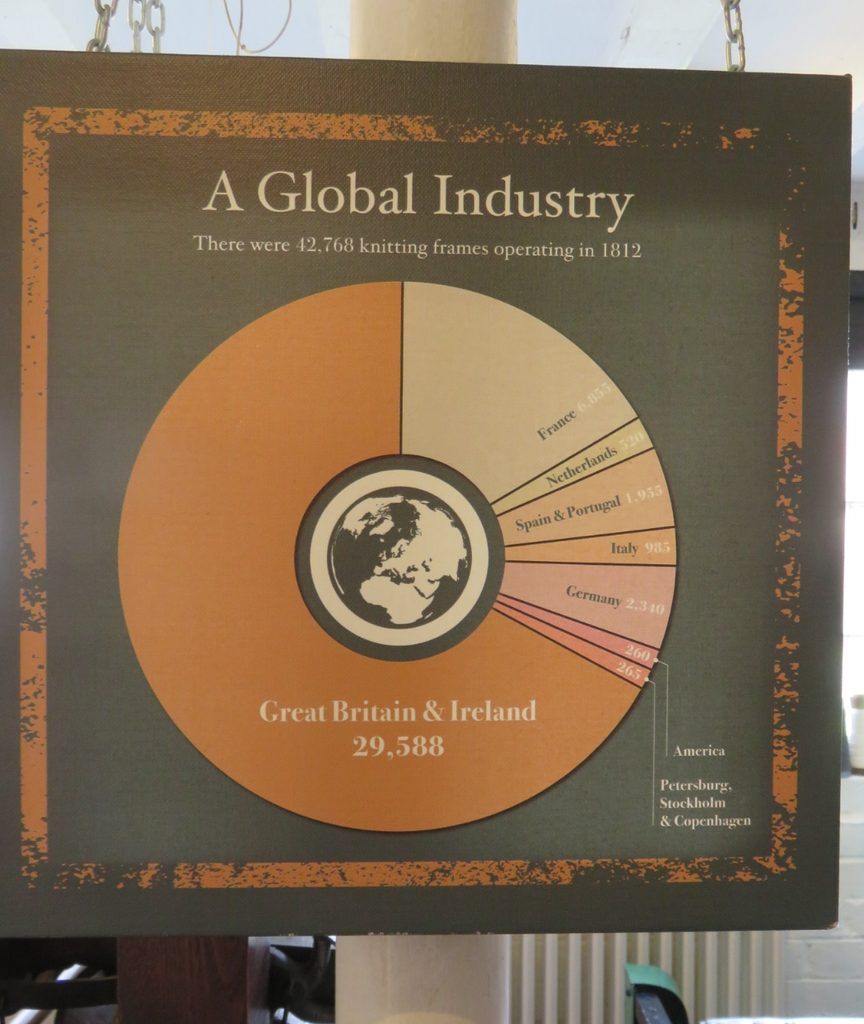
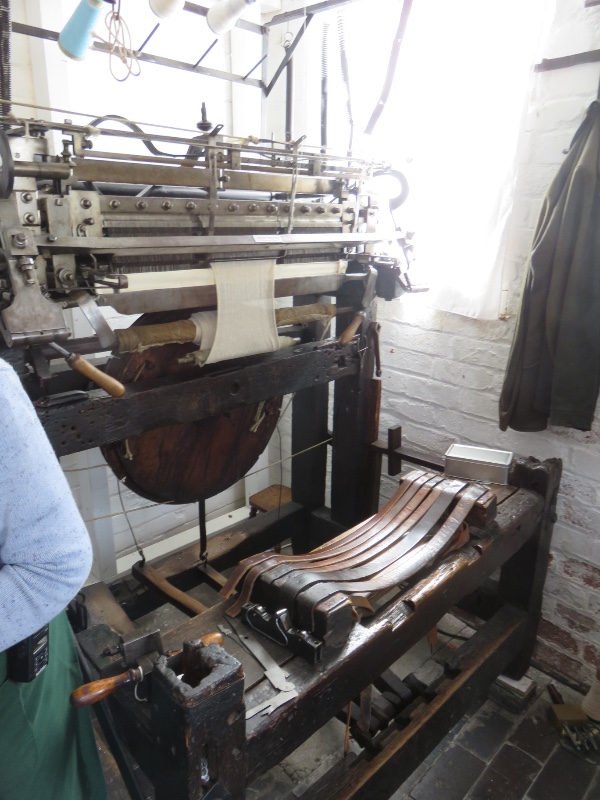
Knitting Frame History
‘Poor as a stockinger’ has been a phrase from the 1500’s when men’s and women’s stockings were worked by hand using needles and then on the early ‘knitting machine’ then called a knitting frame. As a four and a half decade machine knitter, it’s fascinating and humbling to see where the industry started and used to be…mostly in England and Ireland.
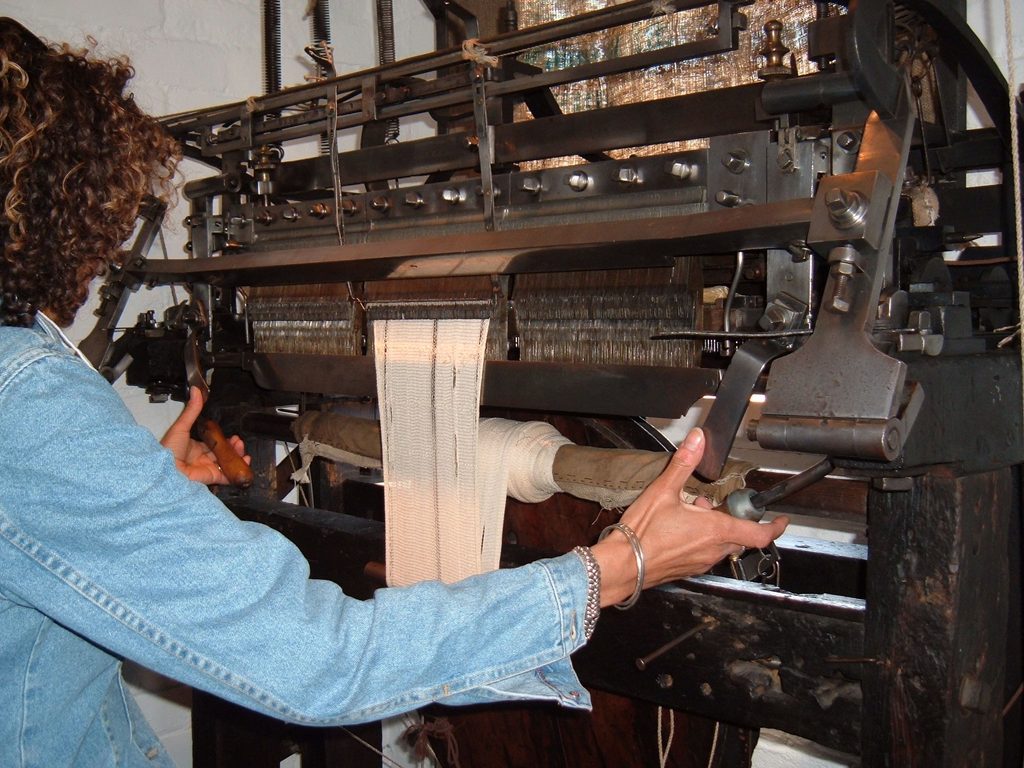
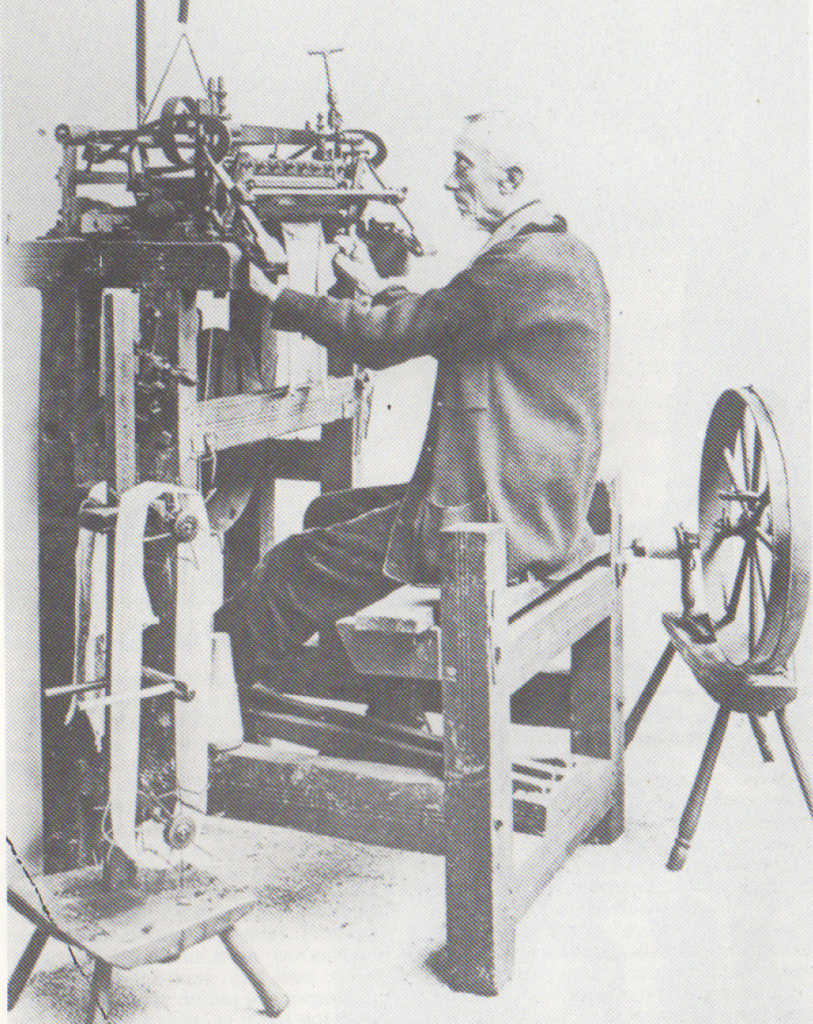
I was fortunate to be in England back in 2007 and got to go to the Ruddington Framework Knitters Museum with a friend. I asked her to take a photo of me actually working one of the frames and this is all I have. We were the only two folk at the museum at the time and the docent asked if I would like to try working a frame.
They don’t allow that anymore and the museum is much busier with more staff and a lovely tea room which opens an hour before the museum buildings open. The lovely young man who was the only person guiding us that day, told me where to put my feet, my knees, my hands and thumbs, then instructed me what to move or press when which resulted in one row knit of fine cotton….that was 8 movements!
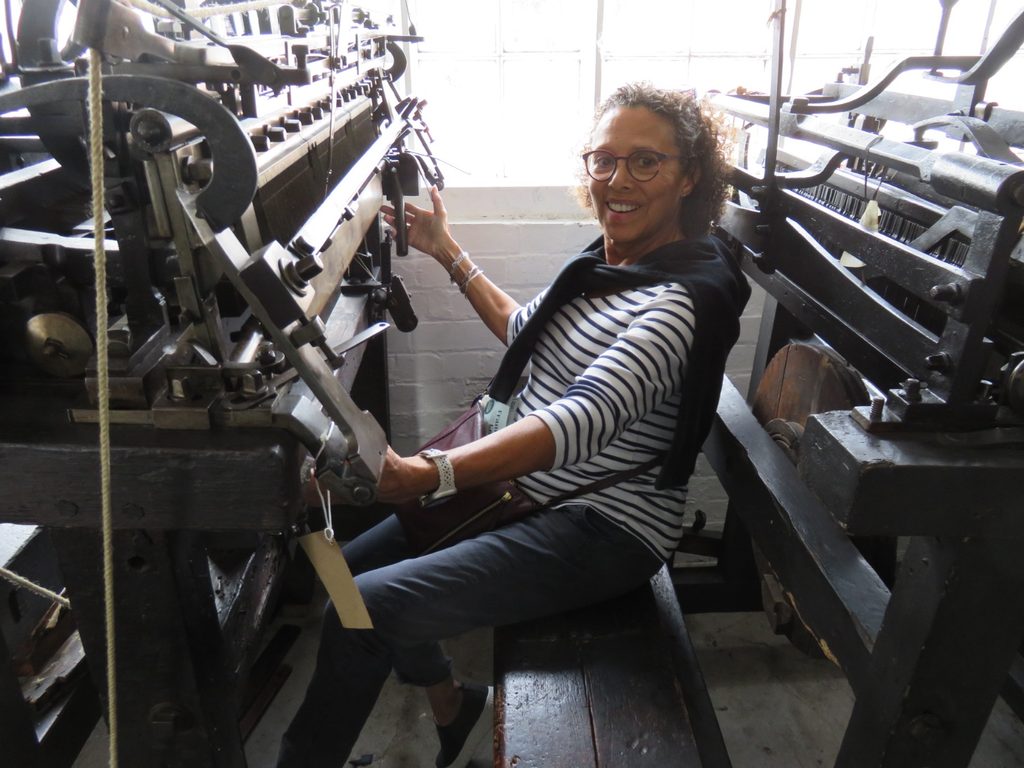
Here I am just two weeks ago in the village by Nottingham, Derbyshire, once again sitting at a knitting frame. Imagine sitting at one of these from first light to last with your wife working on the heels and toes and earning a pittance for your family’s efforts.
There were Commissions of Enquiry in the House of Commons over the poverty of the stockingers and the Luddites in the early 1800’s destroying frames … there was a glut of frames at that time and the employers shared the work around while still deducting full frame rent. Knitters also had to pay for oil and needles for their frames. If their wives were unable to undertake seaming the stockings or their children the winding of bobbins, it was their responsibility to get these tasks done by someone else and to pay them. Between a third and a half of their income was absorbed in charges connected with their work, particularly in Winter when candles and coal had to be paid for.
The following is from the booklet ‘Framework Knitting’ by Marilyn Palmer:
John Thurman of Shepshed, a village near Loughborough, had a wife and seven children and knitted plain wrought hose. He told the commission: ‘The boy and me make four dozenn of them in a week; the I have to pay 2s 3d frame rent for the two frames; then I have to pay 7 1/2d for needles for the two frames; then I have to pay for candles 4d per week. Then there is oil I have to pay 2d for; then I have the materials to buy towards the frame, wrenches, hammers, keys and everything of that sort. My little boy does the winding, that would be 6d if I was obliged to put anybody else to do it. Then I have coa 1s 3d per week, that is in the Summer we do not use as much as that, but in the Winter we use fire, that is, for the house and shop and all.’
His income amounted to £1 2s 3d a week and his expenditure on the expenses of his work, his rent and coal came to 9s 7 1/2d. This left the family 12s 8 1/2d a week for food and clothing. Many knitters’ families had even less: 3s 6d for a family of six as listed on several occasions in the 1844 report.
John Thurman continued his evidence by saying that: ‘The wholke nine of us lie in two beds, and for those two beds we have one blanket for both….’
When I first visited the museum 20 years ago I was told clothes would have to be ‘pledged’ into the shop to get a bit of bread to go on with during the week!
Making anything by hand always involves some tools: a potter’s wheel, kiln, studio space, my domestic knitting machines, weaving looms, sewing machines, paints and brushes, canvas and so on. Not only that, to sell your work there are show fees involving travel and housing if you journey to another, bigger town as I did going to Toronto and Chicago. Then when you come back with money in your pocket there are the fees to pay for the next shows you are juried into. I’ve had to have my machines fixed or buy parts to fix myself.